

Please, share ❤️
The world has not stopped sympathising with Ukrainians — it just focuses on their stories less often. A practical guide for those who don’t want to give up.
Almost four years of full-scale war have passed. Ukrainians continue to fight, lose, hold on, and win. Destruction, evacuations, rocket strikes — this is the daily reality. But in Western social media feeds, this reality is becoming less visible. Not because the world has become indifferent, but because algorithms distribute attention differently — and in this system, what survives is what gets the most reaction.
This text is not a universal instruction manual or an attempt to ‘outplay’ the platforms. It is a working framework for the Ukrainian context: how to talk about the war in a way that keeps us from being washed away from the feeds — without turning the tragedy into a show.
Key points:
- Algorithms optimise engagement, not importance — social networks do not assess social value, they count reactions
- Compassion fatigue — the psyche protects itself from overload: when a person sees trauma for months, they scroll on to maintain balance
- War fatigue also exists in Ukraine: 57% are willing to endure ‘as long as necessary’ (down from 73% a year ago), and assessments of the future have fallen from 7.9 to 6.9 points (Gallup, KIIS 2025)
- 47% of Ukrainians are under high stress — for children, exams have become more stressful than anxiety (UNICEF 2025)
- The algorithm works systematically and indifferently — without conspiracies — it is not ‘against’ anything, it is simply ‘for the numbers’
- Russian propaganda exploits fatigue: 33% of queries to AI chatbots return Kremlin narratives (United24 Media 2025).
- Solution: serialisation of content — repeated interaction = a signal of value for the algorithm.
- Personalisation + global context: ‘Olena operates by torchlight’ is memorable, ‘shelling of the power grid’ — dissolves
- Interactivity works: polls, ‘challenges’, counters — anything that makes the viewer a participant
- Each platform has its own logic: TikTok likes a strong start within 3 seconds, YouTube likes viewing time, Instagram likes swipes
- Emotional range is critical: constant trauma turns the audience off; the whole spectrum is needed (resilience, humour, victories)
- Data + story = balance: emotion attracts, numbers add credibility
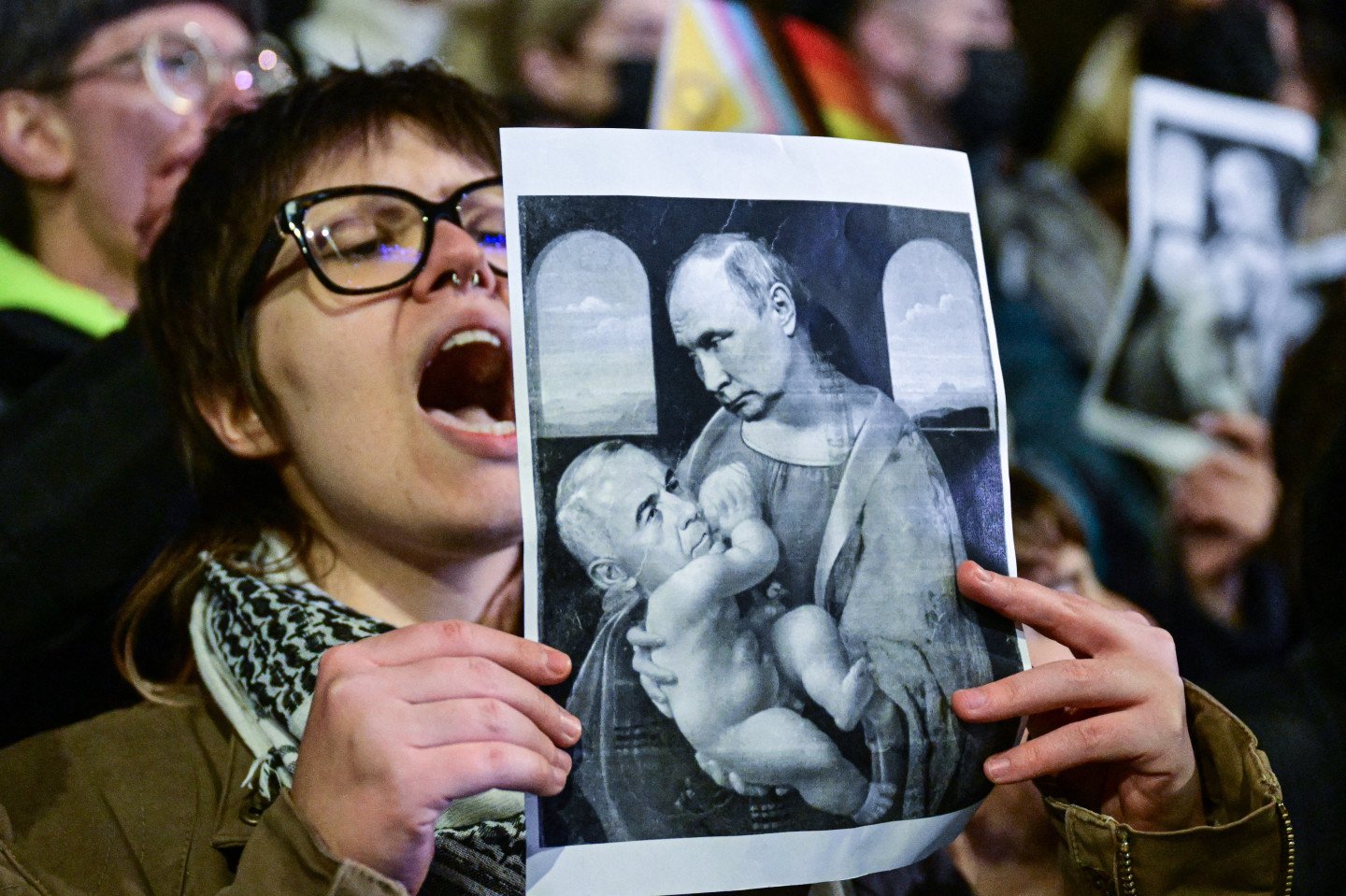
In a study published in the journal PNAS Nexus in February 2025, scientists found that the Twitter(X) algorithm systematically amplifies emotionally charged content, even if users don’t want to see it. The experiment showed that people receive more posts in their feed that provoke anger and tension towards political opponents — and at the same time, users themselves say that they do not like this content and that it worsens their attitude towards society.
There is no need for conspiracy theories here. The attention economy is enough — and in it, war often loses out to simpler and more ‘catchy’ content.
But Ukrainian media are not powerless. The rules have changed — and they can be taken into account.
How to create war content that algorithms do not ignore
Social networks do not measure ‘importance.’ They measure interaction: likes, comments, viewing time, saves. War often loses because of a format that no longer holds attention.
The key question is not how to ‘circumvent’ the system. The question is how to create content that naturally elicits interaction — without turning tragedy into entertainment.
Serialisation instead of one-off posts
A post about shelling appears once — people see it, scroll past it, forget it. The algorithm has no reason to return it to the feed. Instead, series that bring the audience back work. ‘A week in a frontline town’ — seven short videos about one family. Or daily updates from a soldier on rotation — without heroisation, just the everyday reality of war.
Algorithms reward repeated interaction. If a person returns for a second series, it is a signal that the content has value.
Personalisation plus global context
“Shelling of Kharkiv” — a headline that Western audiences have seen hundreds of times. It is less and less likely to stop them scrolling. Instead, specifics work: “Olena, a doctor from Dnipro, is operating by flashlight for the third time this week” — plus an explanation of why this is important for Europe.
Or instead of “the military repelled the attack” — “Andriy, a former programmer, is holding his position near Avdiivka. If this line falls, the next one is 40 km away.” A concrete image is more memorable than an abstract one.

Interactivity: the viewer becomes a participant
Passive viewing rarely triggers the algorithm. But if you give people the opportunity to act — even symbolically — the picture changes. A poll with a short context before the choice. ‘Share if it’s important’ — but with a transparent results counter. Or a ‘challenge’ without trivialisation: ask a Western audience to spend 48 hours without electricity and share their experience.
Algorithms reward active interaction — comments, sharing, participation.
Adaptation to platforms
Universal content loses everywhere. Each platform has its own logic.
TikTok and Reels thrive on short series with a strong “hook” in the first three seconds. Research has shown that “the algorithm loves war” — when it is presented in the language of the platform.
Twitter works with threads and data visualisation. Each post in a thread must be self-sufficient so that it can be shared separately.
YouTube rewards viewing time, so it’s better to have a longer video with good attention retention than a short ‘perfect’ one in terms of editing. A structure with clear chapters helps.
Instagram loves carousels — swipes are read as interaction.
Emotional range: not just trauma
If all the content is about death and pain, the audience will tune out due to overload. You need the whole spectrum: people’s resilience, military humour as a way to cope, small victories, everyday life under shelling.
The algorithm also gets ‘tired’ of monotony. Different emotions elicit different types of reactions — and higher engagement.
Data plus story
Statistics alone are dry. A story without numbers can sound like an isolated case. Together they work: a specific story ‘hooks’ the audience, numbers add credibility, visualisation holds attention, and global context makes the topic relevant.
“Marina lost her home on 18 February” → “She is one of 250,000 this year” → map of destruction → “This is what Marina is doing now” → “Why reconstruction is a matter of European security”.
What not to do
Repeated headlines like “Russia has shelled again” have been seen a thousand times. Passive tones such as “it happened” and “it was destroyed” do not hold attention. Lack of context for Western audiences is a guaranteed loss. A weak start in the first three seconds means that scrolling will continue. Ignoring the specifics of platforms is another quick way to “shoot yourself in the foot.”
Algorithms don’t censor — they optimise
Modern social networks don’t work like editorial offices. They don’t decide what to show based on the social value of the news. They optimise the time spent on the platform.
As explained in a study from Science published in November 2025, social media algorithms have a simple goal: to keep users on the platform for as long as possible. To do this, they analyse millions of signals — likes, comments, viewing time, scrolling speed — and use this data to decide what content to show next.
‘Algorithms have no political position, but they do have a goal — to maximise engagement,’ the study’s authors write.
The war in Ukraine requires something else: pause, emotional investment, context. This almost never fits into 15 seconds. And the algorithm evaluates precisely what can be measured quickly.
A study of Ukrainian and Czech creators on TikTok, published in May 2025, revealed a paradox: ‘the algorithm loves war’ — but only in a format that fits the platform’s viral logic. Memification, short videos with music, emotional ‘hooks.’ Everything else loses priority.
When content about war does not elicit an immediate reaction, the algorithm reads it as a lack of interest. It does not distinguish between a ‘complex topic’ and an ‘uninteresting topic.’ It only sees numbers.
Compassion fatigue — how the psyche protects itself from overload
In early 2022, the world was in shock. Ukrainian flags, posts of support, and mass fundraising campaigns filled social media feeds. People watched live broadcasts from Kyiv, read reports from Bucha, and shared eyewitness accounts.
But over time, emotional fatigue set in.
As explained by the Georgetown Journal of International Affairs in its 2024 study, this phenomenon is called compassion fatigue. When the psyche is overloaded, it activates a defence mechanism.
‘When a person sees death, destruction, and pain in their feed for months on end, they start scrolling further to maintain emotional balance. The psyche seeks balance.’
Algorithms record this behaviour as a signal:
- Fewer clicks → less time on the post → fewer views
- Fewer likes → less engagement → even less visibility
- Fewer shares → less virality → the algorithm switches to other content
This is how a quiet decline in the visibility of war occurs — without orders ‘from above’ and without censors. It is a side effect of a system that rewards the fastest response.
A study by Atlantis Press, which analysed Twitter(X) and Weibo during the first months of the war, showed that emotional oversaturation leads people to either disconnect from the topic or switch to ‘passive observation’ — they see, but do not react.
To the algorithm, this behaviour looks like the topic is ‘no longer interesting.’
Ukraine is tired of itself
But the most alarming thing is that fatigue exists not only in the West — it also exists within Ukraine.
According to a Gallup poll published in 2025, Ukrainians’ assessment of their future has fallen from 7.9 (at the start of the war) to 6.9 points. This reflects not only the military situation, but also emotional exhaustion from prolonged stress.
The Kyiv International Institute of Sociology (KIIS) recorded in January 2025 that only 57% of Ukrainians are willing to endure the war ‘as long as necessary.’ A year ago, this figure was 73%. A decline of 16 percentage points in a year.
People have not given up. But their endurance is not limitless.
A UNICEF study in conjunction with the ‘How are you?’ programme, published in August 2025, showed that 47% of Ukrainians experience high levels of stress. At the same time, 73% demonstrate a certain resilience — but some people are in a state of high stress with low resilience and need additional support.
For children, war has become part of everyday life: 34% of children say that exams are a greater source of stress than air raid sirens (27%). They have not stopped being afraid of missiles. They have learned to live in this state — and this is a marker of the depth of their fatigue.
If Ukrainians living under shelling feel exhausted, it is even easier for Western audiences to ‘burn out’ on a topic that exists for them mainly as content in their news feeds.
Is this a conspiracy against Ukraine?
The short answer is no.
The longer answer is that systemic indifference can be just as dangerous. It cannot be ‘exposed’ by a single investigation because it is built into the mechanics of the platforms. The algorithm has no position. It has a goal: to maximise measurable response.
At the same time, as shown by a study in Nature Communications published in October 2024, Russian propaganda actively exploits fatigue. Analysis of social media before and after the invasion showed that content that plays on group identity and hostility towards ‘the other group’ receives the highest engagement.
The Kremlin uses this logic systematically:
- fake accounts promoting narratives about ‘European fatigue’;
- disinformation campaigns about ‘misuse of aid’;
- manipulative content that undermines confidence in support for Ukraine.
As United24 Media wrote in September 2025, the Russian network ‘Pravda’ infiltrated the environment from which large language models (LLMs) learn and cite information, including Wikipedia and news sources relied upon by chatbots. As a result, 33% of queries to popular AI chatbots reproduce the Kremlin’s propaganda narratives.
And this content is often ‘perfect’ for algorithmic logic: short, emotional, provocative.
What this means for Ukrainian media in 2026
At the Journalism Festival 2025, the problem of ‘Ukraine fatigue’ in the media was discussed. One of the conclusions sounds harsh: the formats of 2022 no longer have the effect we have come to rely on.
The most dangerous thing is to rely on inertia: that it is enough to ‘show the war,’ publish photos of ruins, statistics of losses, and footage from the front lines.
In 2026, Ukrainian media will have to shift their focus.
Explain, don’t just record
Instead of yet another drone video, provide context that explains why this event is important to the world. Instead of ‘here is the shelling,’ say ‘here is the logic behind this shelling and its implications for European security.’
Provide meaning, not just shock
Instead of yet another shot of a destroyed building, tell the story of one family who lived there. Specific people work better than abstract numbers because they create connection and memory.
Speak the language of the world, not just an internal code
Ukrainian media naturally write for their own people. Western audiences need a different ‘bridge’: why this concerns their everyday life, economy, politics, and security. In addition to emotions, logic is also important here.
Use formats that platforms pick up
As research by TikTok creators shows, war content can be visible on social media — when it is adapted to the logic of the platform. There is no need to trivialise war. But it is necessary to use the tools available.
The world is not tired of Ukraine — it is tired of the format
The main idea is simple: the problem is often not the topic, but how it is presented.
Global attention is limited and competitive. It is distributed by algorithms designed for rapid consumption. If Ukrainian media repeat the strategies of 2022 in the reality of 2025–2026, they will lose not only to Russian propaganda — they will lose to the mechanics of the platforms.
Algorithms do not wage war. But they can determine what people see every day — and what remains off-screen.
In 2026, Ukrainian media need to speak more accurately, not louder. They need to find new ways to tell the truth that we know. They need to build understanding — and only then ask for empathy.
Because the world is not tired of Ukraine.
It is tired of how often Ukraine sounds the same in its feed.
If we don’t change the presentation, the platforms will do it themselves — simply by reducing the visibility of our stories.






Ми у соцмережах: